A / 01
Investigate context
Keep actors, sessions, object ownership, and application state in view instead of treating every request as an isolated payload.
 VulnGPTBY NOVASECLABS
Modern applications break in the gaps between users, permissions, state, and business rules. VulnGPT is built to investigate those gaps — and demand evidence before raising an alert.
VulnGPT is being developed for both hands-on security practitioners and builders who need a clearer path to application security.
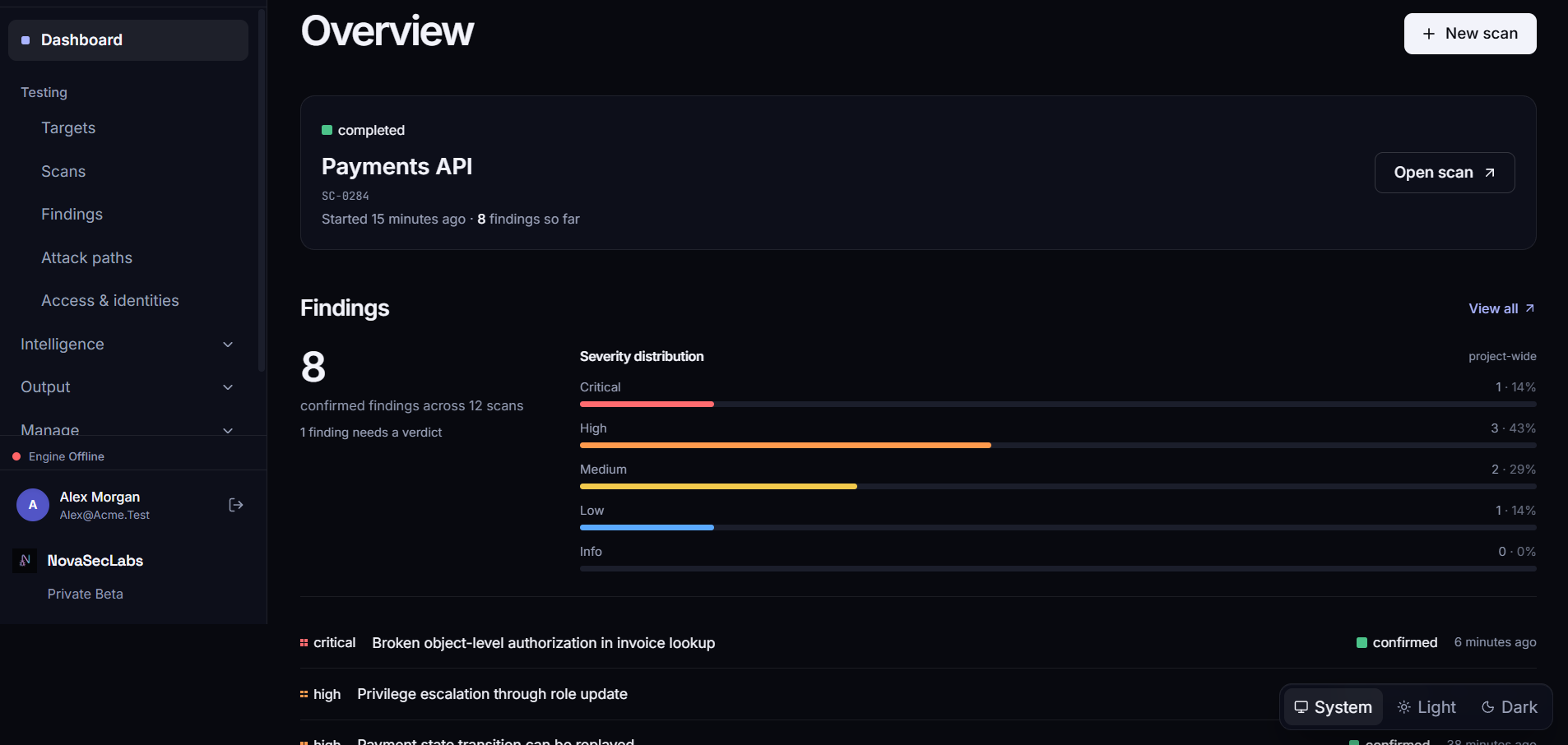
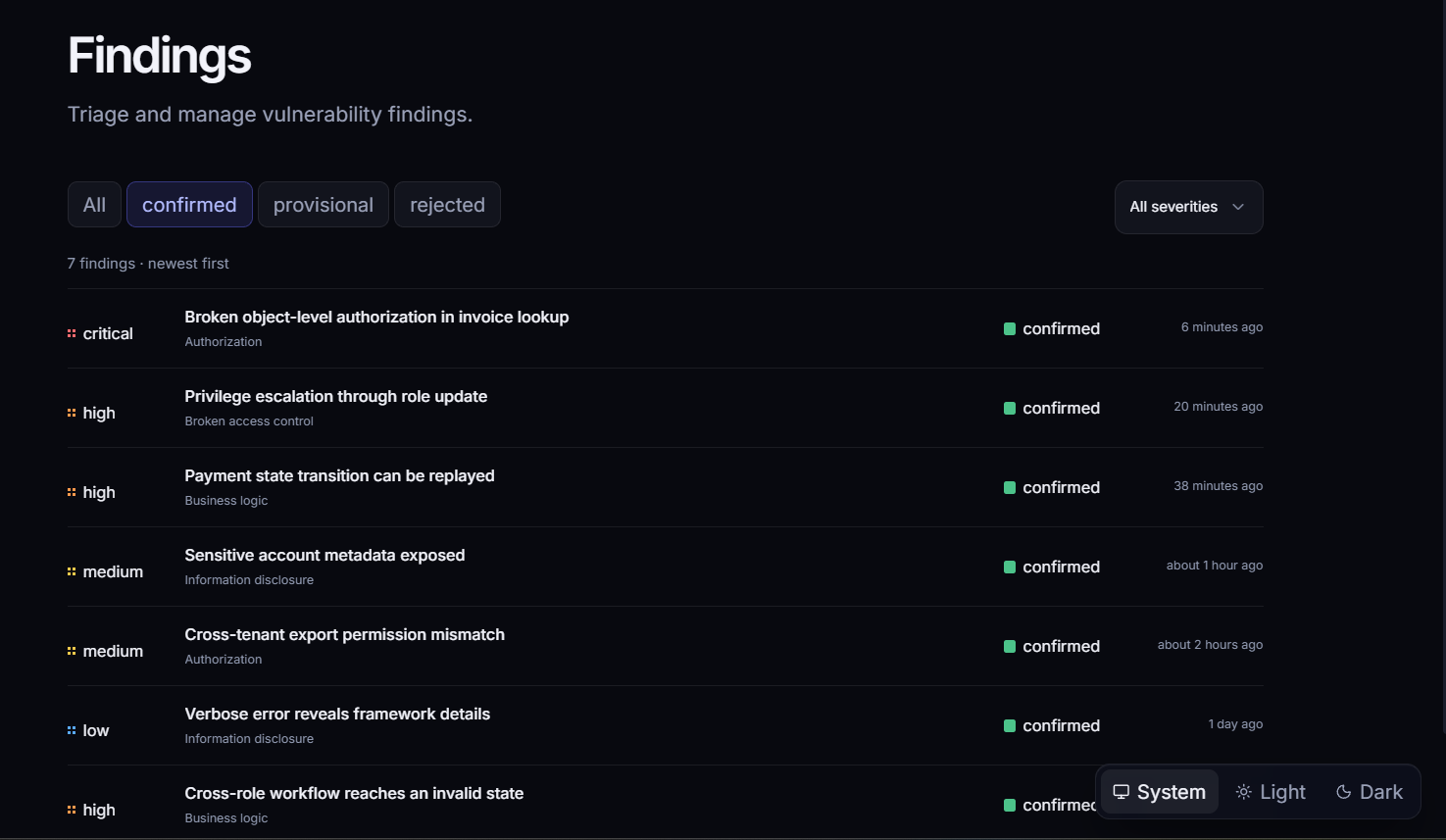
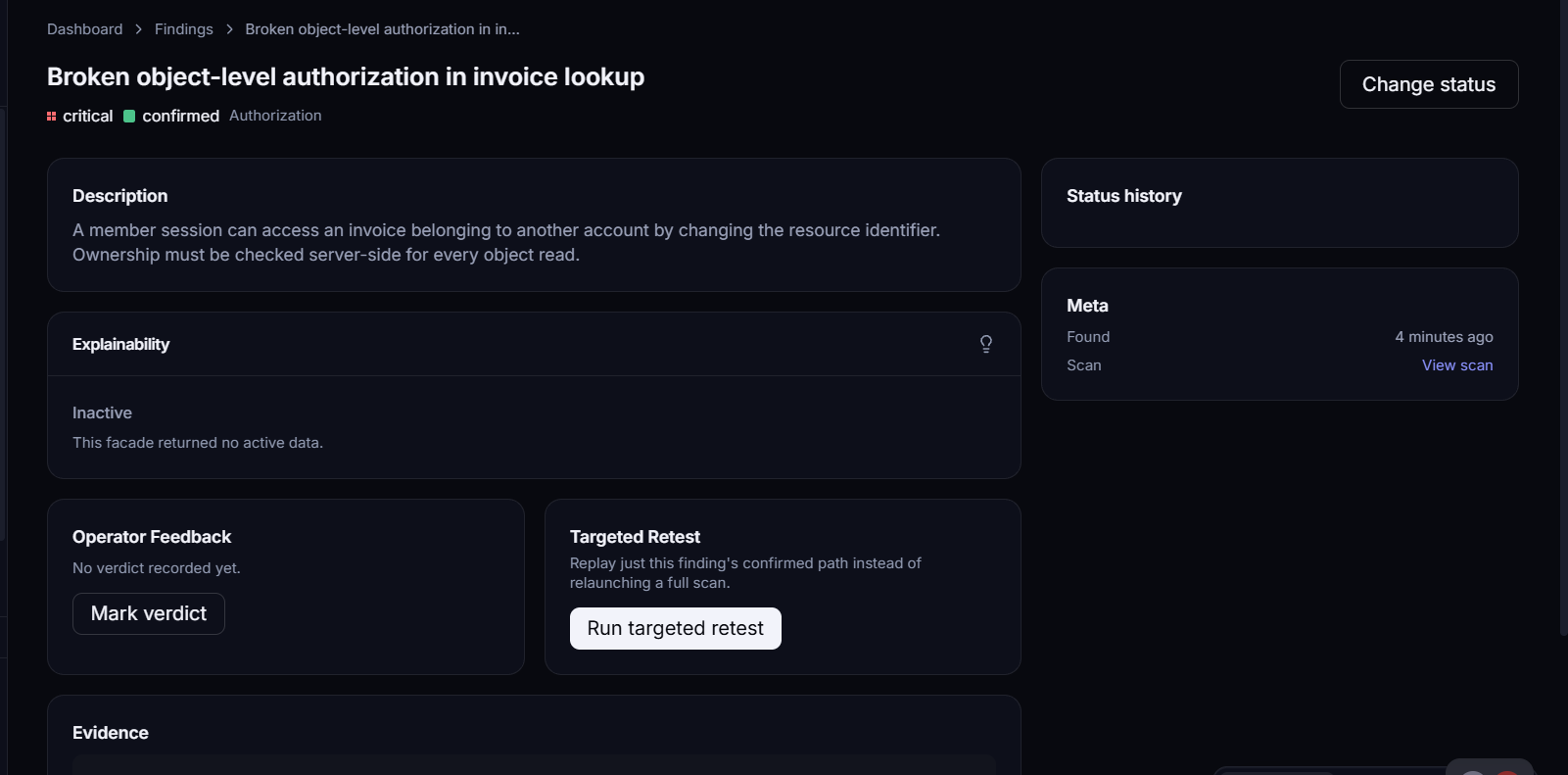
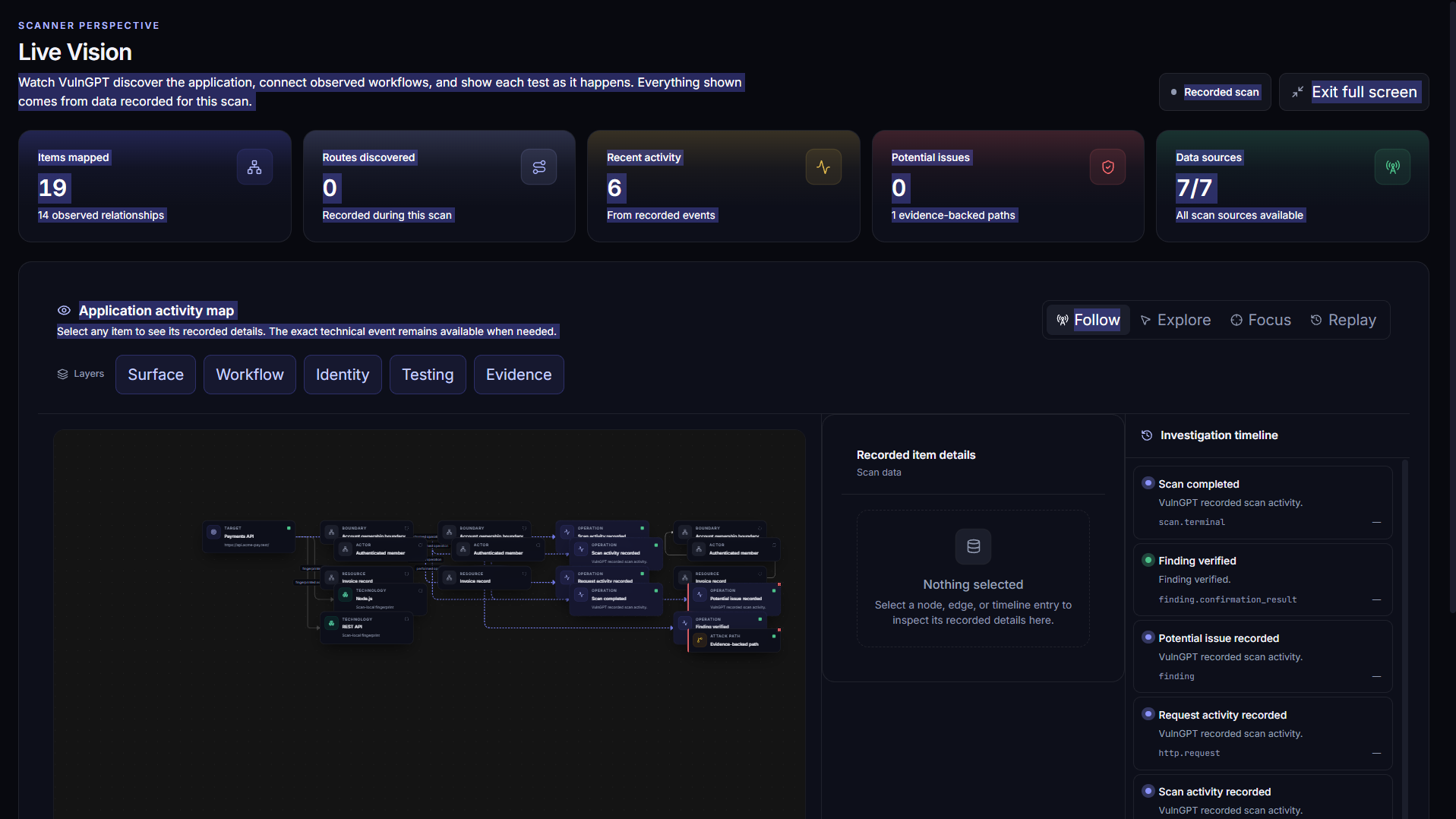
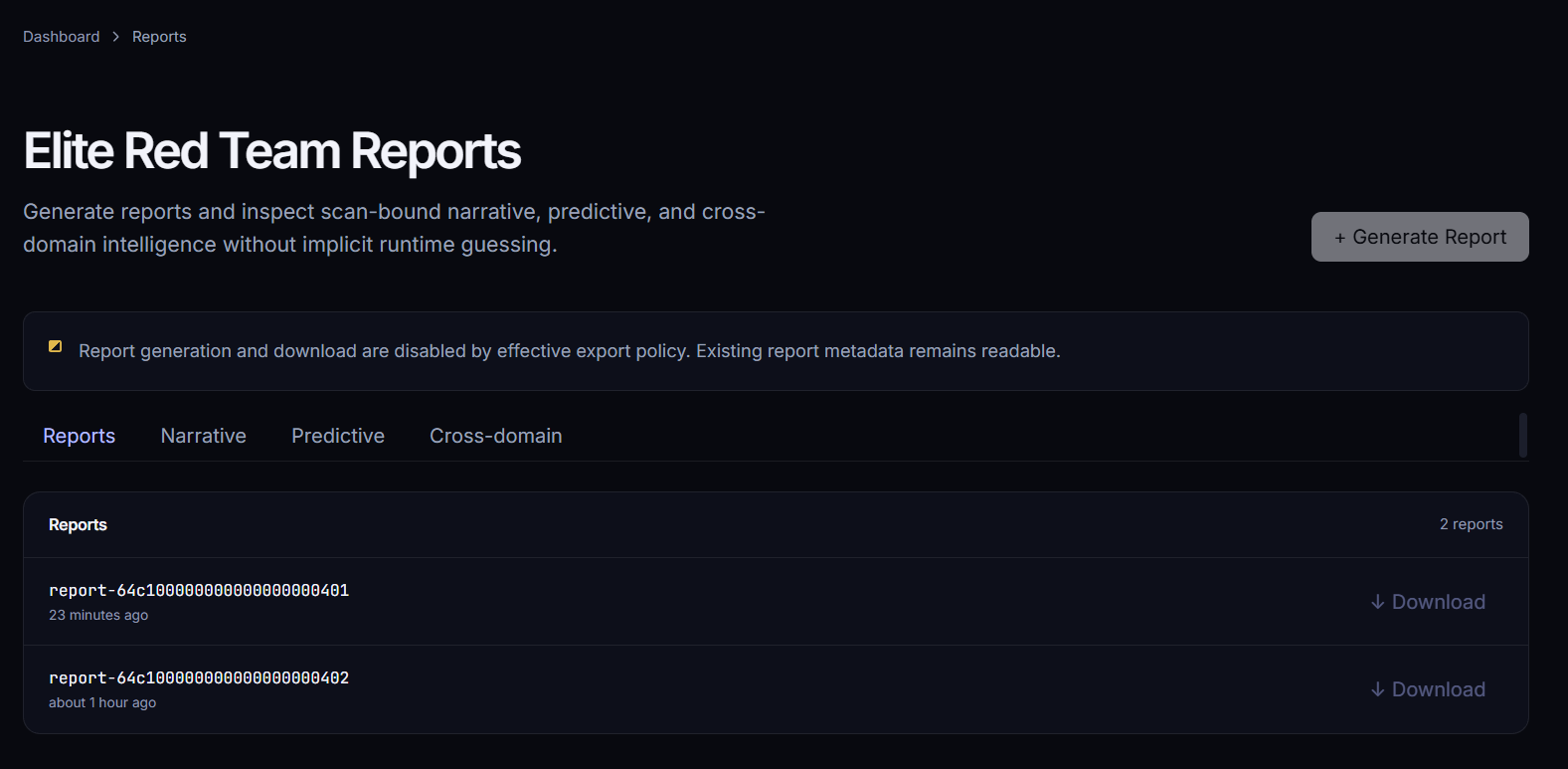
Genuine product-interface captures supplied for this showcase. Open any image for the full-size view. Workspace names, counts, statuses, and report controls reflect the captured state only; they are not live telemetry, customer outcomes, or a guarantee of current availability. The report capture explicitly shows generation and download disabled by export policy.
Finding a suspicious response is easy. Establishing what it means — under the right identity, state, and permissions — is the hard part.
Keep actors, sessions, object ownership, and application state in view instead of treating every request as an isolated payload.
Separate discovery from confirmation. Look for controlled evidence that supports — or falsifies — a suspected issue.
Prioritize reproducible evidence and clear reasoning, so security teams spend less time triaging unsupported signals.
Complex application vulnerabilities emerge from relationships and transitions — not just strings that match a known pattern.
Investigate object-level access, ownership checks, and BOLA/IDOR-style failures across actors.
Reason across sessions, identity, and multi-step flows where one request depends on what happened before.
Probe the assumptions connecting actions, records, roles, and workflow rules — where generic scans often stop short.
Account for WAF behavior, throttling, session expiry, and changing state before interpreting a result.
A disciplined path from a behavioral signal to a finding a human can inspect and reproduce.
Understand the reachable application behavior, identity, and relevant state.
Form a testable hypothesis about what the application should enforce.
Use controlled interventions to distinguish a real flaw from a misleading signal.
Keep findings tied to observable behavior and a path that can be checked again.
A security result should explain the expected boundary, the controlled test, the observed behavior, and the limitations. A suspicious signal is a reason to investigate—not a performance claim.
VulnGPT is in private beta. No public detection-rate, universal zero-false-positive, or independent-certification claim is made here.
Help shape an evidence-first approach to application security testing.
Request private beta